
 Wallet
  Exchange
  Quick swap
  Fees
Fees 
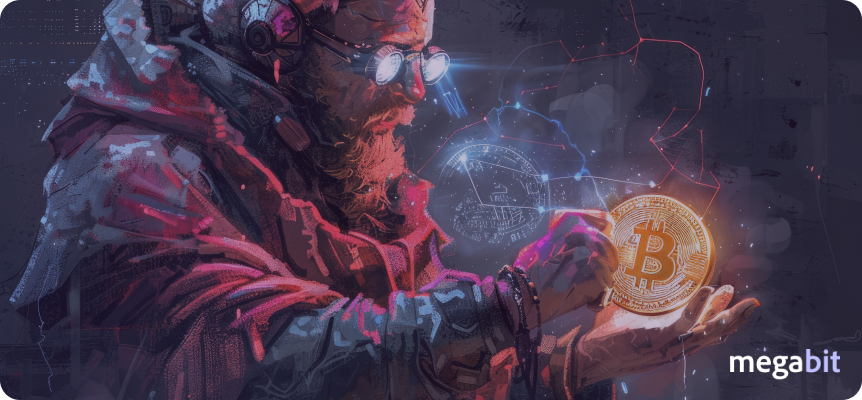
As the first and most popular cryptocurrency, Bitcoin has become a household name. But what exactly is Bitcoin, how does it work, and why does it hold such significance? Let’s dive into the fascinating world of Bitcoin.
What is Bitcoin?
Bitcoin (BTC) is a decentralized digital currency that allows users to send and receive money without relying on intermediaries like banks or payment processors. Created in 2009 by an anonymous figure known as Satoshi Nakamoto, Bitcoin operates on blockchain technology—a transparent and immutable ledger distributed across thousands of computers worldwide.
In simple terms, Bitcoin is “digital gold.” Unlike traditional currencies, it is not controlled by any central authority, making it immune to inflation, censorship, or manipulation.
Key Features of Bitcoin
Bitcoin stands out due to its unique features, which have contributed to its popularity:
- Decentralization: Bitcoin operates on a peer-to-peer network, with no central authority overseeing transactions.
- Limited Supply: The maximum supply of Bitcoin is capped at 21 million coins, ensuring scarcity and value preservation.
- Security: Bitcoin transactions are secured through cryptographic algorithms, making them highly resistant to fraud.
- Transparency: Every transaction is recorded on a public blockchain, which anyone can access and verify.
- Global Accessibility: Bitcoin can be used anywhere in the world, breaking down barriers of traditional financial systems.
How Bitcoin Works
Bitcoin operates on blockchain technology, which is essentially a decentralized ledger that records all transactions. Here’s a step-by-step overview of how it works:
- Transaction Initiation: A user sends Bitcoin from their digital wallet to another wallet.
- Network Verification: The transaction is broadcast to the Bitcoin network, where miners verify its validity.
- Block Formation: Verified transactions are grouped into a block.
- Consensus Mechanism: Miners solve complex mathematical problems (Proof-of-Work) to add the block to the blockchain.
- Immutable Record: Once added, the transaction becomes a permanent part of the blockchain.
This decentralized and transparent process ensures that Bitcoin remains secure and reliable.
Why is Bitcoin So Popular?
Bitcoin’s popularity stems from several factors:
- Store of Value: Bitcoin is often compared to gold due to its scarcity and ability to hedge against inflation.
- First-Mover Advantage: As the first cryptocurrency, Bitcoin enjoys widespread recognition and trust.
- Decentralization: Its independence from governments and financial institutions appeals to those seeking financial sovereignty.
- Investment Potential: Bitcoin’s price has grown exponentially since its inception, attracting investors worldwide.
- Global Utility: Bitcoin is used for payments, remittances, and as a medium of exchange in regions with unstable currencies.
Bitcoin’s Price History
Bitcoin’s journey has been nothing short of extraordinary. Here’s a brief look at its price evolution:
- 2009-2010: Bitcoin had virtually no monetary value. Early adopters mined it using basic computers.
- 2013: Bitcoin crossed the $1,000 mark for the first time, sparking global interest.
- 2017: The price skyrocketed to nearly $20,000, marking its entry into mainstream finance.
- 2021: Bitcoin reached an all-time high of over $68,000, driven by institutional adoption and market demand.
While Bitcoin’s price has experienced volatility, its overall trend remains upward, solidifying its status as a valuable asset.
The Role of Bitcoin in Modern Finance
Bitcoin is revolutionizing the financial landscape by introducing new possibilities:
- Decentralized Finance (DeFi): Bitcoin serves as the foundation for many DeFi applications, enabling peer-to-peer lending, borrowing, and more.
- Cross-Border Payments: Bitcoin facilitates fast and cost-effective international transfers without intermediaries.
- Hedge Against Inflation: With its fixed supply, Bitcoin protects wealth from the devaluation of fiat currencies.
- Financial Inclusion: Bitcoin provides access to financial services for the unbanked and underbanked populations worldwide.
Bitcoin Mining: The Backbone of the Network
Bitcoin mining is the process of validating transactions and adding them to the blockchain. Miners compete to solve cryptographic puzzles, and the first to succeed earns newly minted Bitcoin as a reward.
Mining is essential for:
- Transaction Verification: Ensuring the legitimacy of transactions.
- Network Security: Preventing double-spending and fraud.
- Bitcoin Creation: Introducing new coins into circulation.
However, mining requires significant computational power and energy, leading to debates about its environmental impact.
Bitcoin’s Advantages
Bitcoin offers numerous benefits that make it a revolutionary technology:
- Decentralization: No single entity controls Bitcoin, ensuring freedom and fairness.
- Security: Transactions are nearly impossible to hack or manipulate.
- Transparency: The public ledger allows anyone to verify transactions.
- Accessibility: Bitcoin is available to anyone with an internet connection.
- Portability: Bitcoin can be transferred instantly across the globe.
Challenges Facing Bitcoin
Despite its success, Bitcoin faces several challenges:
- Volatility: Its price can fluctuate significantly, making it unpredictable.
- Scalability: The network struggles with high transaction volumes, leading to slower processing times.
- Regulation: Governments worldwide are still figuring out how to regulate Bitcoin.
- Environmental Concerns: Mining consumes a large amount of energy, raising sustainability issues.
These challenges are being addressed through technological advancements and innovative solutions.
The Future of Bitcoin
What lies ahead for Bitcoin? While predictions vary, several trends point to its continued growth:
- Mainstream Adoption: More businesses and institutions are accepting Bitcoin as a payment method.
- Technological Upgrades: Innovations like the Lightning Network aim to improve scalability and transaction speeds.
- Integration with Traditional Finance: Bitcoin is becoming part of investment portfolios, alongside stocks and bonds.
- Global Impact: In regions with economic instability, Bitcoin provides a lifeline as a stable store of value.
How to Get Started with Bitcoin
If you’re new to Bitcoin, here’s a quick guide to getting started:
- Learn the Basics: Understand what Bitcoin is and how it works.
- Choose a Wallet: Select a secure digital wallet to store your Bitcoin.
- Buy Bitcoin: Use a trusted exchange like Coinbase, Binance, or Kraken.
- Secure Your Investment: Enable two-factor authentication and back up your wallet.
- Stay Informed: Keep up with Bitcoin news and developments to make informed decisions.
Conclusion
Bitcoin is more than just a cryptocurrency; it’s a technological and financial revolution that continues to reshape the world. As the pioneer of the blockchain movement, Bitcoin has laid the foundation for a decentralized future.
Whether you’re an investor, a tech enthusiast, or simply curious, understanding Bitcoin is crucial in today’s digital era. With its potential for growth and innovation, Bitcoin remains at the forefront of the cryptocurrency landscape.